When a potential client lands on a law firm's website or receives a legal document, the typography speaks before the words do. Selecting authoritative typography for a legal brand identity is about choosing typefaces that project stability, competence, and trust. Law firms deal with high-stakes situations, and the visual presentation of your brand needs to reflect that seriousness. A poorly chosen font can make a firm look outdated or unprofessional, while the right choice quietly reinforces your expertise without distracting from the actual legal advice.
Authoritative typography in the legal sector usually leans on typefaces with strong historical roots or clean, highly legible modern structures. It means avoiding overly decorative scripts or trendy display fonts. Instead, you focus on proportions, weight, and spacing that make dense legal text easy to read while maintaining a formal, respectful tone.
Which typefaces project the most trust for law firms?
Traditional law firms often rely on serif fonts because they carry a sense of history and established precedent. Typefaces like Baskerville or Garamond feel grounded and academic, making them excellent choices for firms specializing in corporate law, estate planning, or litigation. On the other hand, modern practices focusing on tech law or startups might prefer clean sans-serif options. When you are figuring out the best typography styles that convey trust on attorney websites, pairing a strong serif heading with a highly readable sans-serif body text often works best. A font like Lato keeps long paragraphs clear and approachable without losing professional polish.
How do you pair fonts for a law firm logo and website?
Mixing typefaces requires a clear hierarchy. You want contrast, not conflict. If your logo uses a heavy, traditional serif, your website body text should use a lighter, simpler font to prevent visual clutter. Finding the right professional font pairings for a law firm logo and website usually involves limiting your selection to two, or at most three, type families. Use one font for headlines and branding elements, and a second for body copy, contracts, and long-form articles. This keeps the visual identity consistent across your letterheads, business cards, and digital platforms.
What are the most common mistakes legal brands make with fonts?
Many firms fall into a few predictable traps when building their visual identity. Avoiding these errors will immediately elevate the perceived quality of your brand.
- Using too many typefaces: Mixing four or five different fonts makes the brand look disjointed and chaotic.
- Poor screen readability: Selecting fonts with thin strokes or tight spacing that become illegible on mobile devices or client portals.
- Ignoring default formatting: Relying on default system fonts without adjusting line height or letter spacing, resulting in a cramped, uninviting reading experience.
- Overlooking commercial licensing: Using free personal-use fonts for a commercial law firm website, which can lead to copyright infringement claims.
How should you format legal text for maximum readability?
Picking the right font is only half the job; how you set the text matters just as much. Legal documents and website copy are often dense, so formatting is essential to keep the reader engaged. If you want a detailed typography selection guide for legal practice brand identity, pay close attention to structural details. For example, a highly readable web font like Merriweather is specifically designed for screens, but it still needs proper spacing to work well.
- Keep body text between 16px and 18px on websites to accommodate readers of all ages and visual abilities.
- Set line height to at least 1.5 times the font size to give the eyes a natural break between lines of text.
- Use adequate margins and white space so the page does not feel overwhelming or cluttered.
- Limit line length to 60 or 75 characters per line to prevent eye fatigue during long reading sessions.
Your next steps for finalizing your legal typography
Once you understand the principles of legal typography, it is time to apply them to your own firm. Follow this practical checklist to ensure your brand identity is cohesive and authoritative.
- Audit your current website, social media, and print materials to count exactly how many different fonts are being used.
- Select one primary typeface for headings and one highly legible typeface for body text.
- Test your chosen fonts on both mobile screens and printed paper to check for legibility at smaller sizes.
- Verify that you have the proper commercial licenses for every font in your brand kit.
- Create a simple one-page brand guideline document that specifies exact font sizes, weights, and line heights for your team and web developers to follow.
 Font Pairings That Build Trust for Attorney Sites
 Mastering Font Pairings for Law Firm Branding
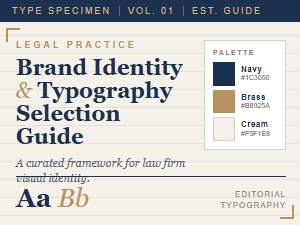 Font Selections for Law Firm Branding
 Serif and Sans-Serif Pairings for Corporate Branding
 Researching Classic Script Fonts for Attorney Logos
 A Professional Guide to Classic Script Fonts for Law Firms