When potential clients visit a law firm's website, they are usually dealing with a stressful situation. They need to feel confident that the attorney is competent and reliable. Before they read a single word about your case results, they judge your firm based on visual cues. Choosing the right typography styles to convey trust for attorney websites acts as the silent foundation of that first impression. The right fonts signal stability, professionalism, and attention to detail, while poor choices can make a practice look amateurish or outdated.
What makes a font look trustworthy for a law firm?
Trust in legal design comes from readability and tradition. Serif fonts, which have small lines attached to the ends of letters, are historically associated with print, academia, and established institutions. This makes them a natural fit for legal branding. A highly legible option like Merriweather provides a classic, grounded feel that reassures visitors. Sans-serif fonts offer a cleaner, more modern look, which works well for tech-focused or progressive law practices. A clean choice like Open Sans keeps the interface feeling approachable and easy to navigate. Success comes from choosing typefaces that are highly legible and avoiding overly decorative or novelty styles.
How should you pair fonts for a legal website?
A single font family rarely works for an entire website. You need contrast to guide the reader's eye and create a visual hierarchy. Designers often pair a traditional serif for headings with a highly readable sans-serif for body text. If you want to understand the mechanics of choosing authoritative typography for your legal brand, looking at established design frameworks helps prevent clashing styles. For instance, pairing a strong heading font like Playfair Display with a simple body font keeps the page looking organized and professional without distracting the reader.
What are the most common typography mistakes law firms make?
Many legal websites lose credibility through simple typographic errors. Using more than two or three font families makes the page look chaotic and unorganized. Another frequent issue is poor color contrast, such as light gray text on a white background, which frustrates older readers who make up a large portion of legal clients. Ignoring line height and letter spacing also creates dense walls of text that discourage reading. To avoid these pitfalls, refer to a structured selection guide for your practice before finalizing your web design. This ensures your choices align with accessibility standards and user expectations.
How does text formatting affect client perception?
Beyond the font family itself, how you format the text changes how clients perceive your firm. Proper typographic hierarchy tells the reader what is most important. Use larger, bolder text for main headings and clearly distinct sizes for subheadings. When highlighting key information, like a free consultation offer or a specific practice area, use bold text sparingly so it actually stands out. Overusing italics or underlining can make the text look messy and hard to scan. Keep your formatting consistent across all pages to maintain a polished, professional appearance.
Which specific font styles work best for different practice areas?
The best typography often depends on your specific legal niche. Corporate and estate planning firms usually benefit from classic, traditional serif fonts that project heritage and stability. Family law and mediation practices might opt for softer, rounded sans-serif fonts that feel more approachable and empathetic. Personal injury and criminal defense firms often use bold, heavy sans-serif typefaces to convey strength, urgency, and aggression. Understanding matching typography styles to your specific attorney website goals ensures your visual identity aligns with the emotional needs of your target clients.
Your typography implementation checklist
- Audit your current website fonts and limit them to a maximum of two primary families.
- Check your text contrast using a free online accessibility tool to ensure readability for all ages.
- Set your body text size to at least 16px and increase line height to 1.5 or 1.6 for comfortable reading.
- Test your website on a mobile device to confirm that headings and paragraphs scale correctly without overlapping.
- Remove any decorative or script fonts from your main navigation and body content areas.
 Selecting Authoritative Fonts for Legal Brands
 Mastering Font Pairings for Law Firm Branding
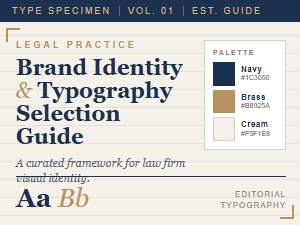 Font Selections for Law Firm Branding
 Serif and Sans-Serif Pairings for Corporate Branding
 Researching Classic Script Fonts for Attorney Logos
 A Professional Guide to Classic Script Fonts for Law Firms